
Top 3 Alternatives of PICOM365 for Pay-Per-Study Pricing
Many imaging teams hit unexpected monthly bills because some tools charge for storage or add-on viewers instead of only per study.
This article lays out three pay-per-study platforms, their storage limits, sharing features, and viewer capabilities, and ends with a clear ranking so you can match the right option to your workflow.
What to Look For in Pay-Per-Study Medical Imaging Platforms
Evaluate pay-per-study platforms by examining upfront fees, overage costs, storage tier limits, and contract flexibility.
Price structures vary widely across pay-per-study pricing models. Some services charge between a few dollars and tens of dollars per study, depending on image complexity and modality. Others require a minimum monthly commitment, even if actual usage falls below that threshold.
Storage allowances also differ. Basic tiers might include a fixed gigabyte limit per study, while higher tiers offer expanded capacity. Overage charges can apply once those limits are exceeded.
Contract terms are equally important. Pay attention to the notice period required for cancellation and any exit fees that may apply if you switch providers before the contract ends.
Study volume resets can affect budgeting. Some platforms reset counts monthly, while others reset annually. Understanding this timing helps avoid unexpected charges during high-volume periods.
1. Medicai - Best Overall
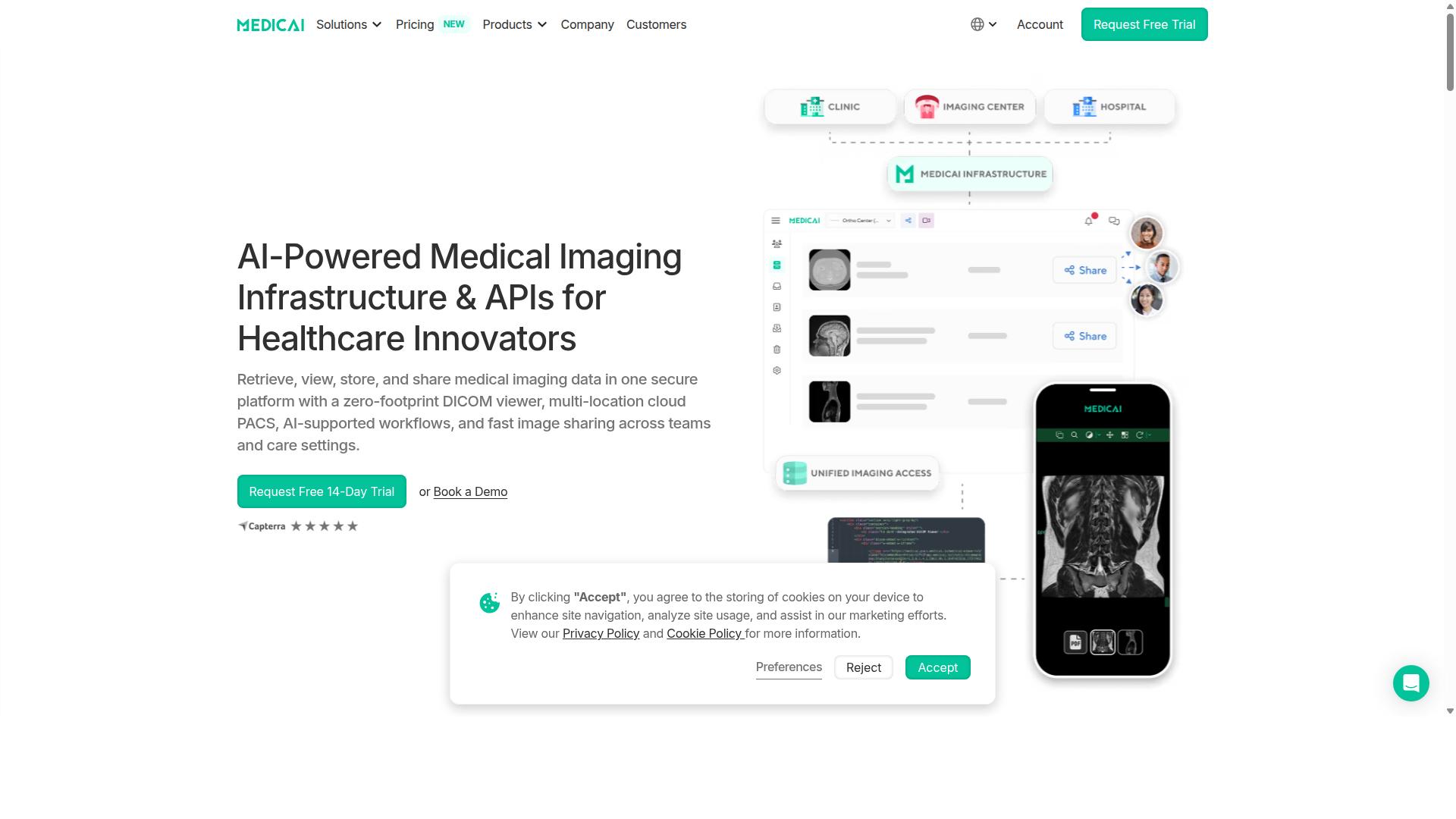
Medicai delivers a cloud PACS platform with a zero-footprint viewer and pay-per-study billing options for radiology teams handling high study volumes.
The platform supports HIPAA and GDPR compliance standards that many healthcare organizations require for patient data protection. Its architecture processes over one million studies each year across multiple continents. This global reach makes it a strong choice for practices seeking reliable medical imaging software without geographic restrictions.
Compared with PICOM365, Medicai positions itself through its combination of compliance certifications, scalable study volumes, and flexible billing models. Teams that need enterprise imaging capabilities can access these features without managing on-premise hardware.
Pay-Per-Study Pricing Structure
Medicai's Starter plan starts at $249 per month and includes 500 GB storage, while the Standard plan costs $749 for 2 TB and one connected location.
Enterprise customers can request custom quotes when their study volume exceeds the Standard tier's included storage capacity. This pay-per-study approach differs from traditional subscription models that charge fixed monthly fees regardless of actual usage.
The structure appeals to radiology groups that experience variable monthly volumes. Centers can scale their imaging study management costs based on actual diagnostic imaging demand rather than predicted capacity needs.
Zero-Footprint DICOM Viewer Capabilities
The zero-footprint DICOM viewer runs in any browser with no local installation, enabling instant study access for referring physicians and teleradiologists.
The viewer includes built-in measurement, annotation, and multi-planar reconstruction tools that radiologists use for diagnostic interpretation. These features support standard radiology reporting without requiring additional third-party applications.
Secure sharing links meet HIPAA compliant storage requirements and can be configured to expire after specific view counts or time periods. This capability helps practices maintain control over medical image management when sharing studies with external providers or patients.
2. ProtonPACS
ProtonPACS is a cloud PACS platform that offers pay-per-study pricing and is frequently compared with Medicai for smaller radiology groups.
This system handles medical imaging across multiple modalities while maintaining HIPAA compliant storage standards. Many practices evaluate it when they want a straightforward alternative to traditional fixed-cost solutions.
Users should compare storage tiers and contract lengths before making commitments. These factors often determine whether a platform aligns with actual workflow needs and budget constraints.
Pay-Per-Study Pricing Structure
ProtonPACS advertises study-based billing that scales with monthly volume, though exact per-study rates are quoted after a short needs assessment.
Prospective users should check minimum monthly study commitments and whether archived studies count toward the billed total. These details affect overall costs, especially for groups with variable caseloads.
Study volume pricing works best when practices have predictable monthly volumes. Groups with seasonal fluctuations may face unexpected charges if minimum thresholds are not clearly understood upfront.
Cloud PACS Storage Limits
Storage limits vary by ProtonPACS subscription tier and can be expanded with additional fees.
Users should verify the amount of long-term archive storage included per tier and whether disaster-recovery copies are counted separately. These policies influence total expenses over time.
Cloud PACS platforms often provide tiered storage options that balance accessibility with cost efficiency. Groups planning to scale their imaging volumes should confirm upgrade paths before committing.
3. Third Alternative
A third pay-per-study option exists for practices seeking a lower-cost cloud PACS with flexible billing cycles.
Buyers should examine study caps, contract exit clauses, and integration with existing RIS or EHR systems before selecting a vendor. These factors influence both immediate workflow and long-term cost. Each practice has different volume patterns and retention policies that affect the final agreement.
Typical evaluation steps include matching current monthly study counts against offered tiers. Contracts often include clauses about data export if the relationship ends. Integration testing with radiology information systems can prevent later technical issues.
Pay-Per-Study Pricing Structure
Pricing for this alternative is typically quoted after assessing monthly study volume and retention needs.
Request a written quote that clearly states the per-study fee and any roll-over study credits. This document should list what counts as a billable study and how unused credits are handled. Clear documentation reduces billing surprises.
Some vendors adjust rates when volumes fluctuate during busy periods. Others offer fixed rates that remain steady regardless of seasonal changes. Understanding these models helps practices forecast expenses accurately.
Additional line items may cover long-term archiving or expedited retrieval requests. Reviewing the full fee schedule before signing helps avoid unexpected costs later.
Image Sharing and Collaboration Features
Image sharing portals allow external physicians to view and annotate studies without local software installation.
Common features include role-based access, audit logs, and support for secure external links that comply with HIPAA. These controls ensure only authorized users can open specific studies. Audit trails help practices meet regulatory requirements during inspections.
External clinicians can often mark regions of interest or leave notes directly in the viewer. The system records each action with timestamps and user identifiers. This documentation supports both collaboration and compliance.
Many platforms also allow temporary access links that expire after a set period. Practices can track when recipients open studies and revoke permission if needed. These capabilities streamline referrals and second opinions across different organizations.
How to Choose the Right Option
Match platform selection to study volume, specialty workflow requirements, and existing EHR integration needs.
Begin by calculating average monthly study volume. Compare this figure against each vendor's included allowances to determine if pay-per-study pricing will reduce overall costs.
Next, verify that specialty-specific tools are available. Providers working in orthopedics, cardiology, neurology, or oncology need platforms that support their particular imaging protocols and reporting requirements.
Finally, test API or HL7 interfaces with your current RIS before making a commitment. Compatibility issues at this stage can delay implementation and increase technical overhead.
Healthcare providers should also consider whether the platform serves their target audience. Medicai works with hospitals, imaging centers, and specialty care providers across multiple disciplines.
Organizations like teleradiology services, tumor boards, and clinical trials require secure image sharing capabilities. The platform must handle both internal workflows and external collaboration needs.
Patient portals represent another consideration for practices that want to give patients direct access to their imaging results. This feature supports virtual care providers and telemedicine platforms in their daily operations.
Final Verdict
For practices prioritizing zero-footprint access and proven high-volume throughput, Medicai offers a compelling pay-per-study solution.
The platform processes 1M+ studies annually while handling 50M+ API transactions each year. These numbers reflect operational maturity that generic radiology PACS alternatives rarely demonstrate at scale.
Security compliance meets HIPAA and GDPR standards. The FDA and CEE cleared viewer supports diagnostic workflows that require regulatory documentation.
Storage capacity reaches 1.7M+ studies with 300k+ visualizations recorded in the past year. This activity level indicates consistent use across the 10,000+ active doctors and 70 clinics and hospitals currently on the platform.
2M+ imaging studies have been uploaded since launch. The Microsoft Azure partnership provides infrastructure backing for sustained growth in radiology workflow demands.
Press coverage highlights Medicai's role in global multidisciplinary tumor boards and support for Ukrainian refugee patients accessing cancer treatments. These use cases show practical application of secure image sharing in real clinical scenarios.
Research suggests that practices evaluating PICOM365 alternatives should compare documented transaction volumes and regulatory clearances rather than feature lists alone. Medicai's numbers provide concrete reference points for study-based billing decisions.
Recommended Resources: