
10 WhatsApp Marketing Software Tools for Bulk Messaging
Your WhatsApp broadcasts are hitting the wrong inboxes or getting blocked, and you need a tool that sends bulk messages without the spam folder. Most platforms fail on deliverability or automation depth, leaving you stuck with manual work.
By the end of this article, you will know exactly which software fits your team size, budget, and campaign needs. I break down ten options, from Com.bot's unified AI platform to budget-friendly senders, with concrete criteria for choosing. You will also get a clear #1 pick for bulk messaging.
What to Look For in WhatsApp Marketing Software for Bulk Messaging
Before choosing a WhatsApp marketing tool, you need to evaluate core capabilities like API reliability, opt-in management, and analytics depth. The right software can mean the difference between smooth broadcast campaigns and getting your number banned.
Start by checking whether the tool uses the official WhatsApp Business API or an unofficial workaround. Unofficial methods often rely on WhatsApp Web automation, which carries a high ban risk and offers no guarantee of message delivery.
Official API access provides verified business credentials, higher sending limits, and access to message templates. This is the only route that supports rich media, interactive buttons, and reliable two-way communication at scale.
Message template approval and limits matter more than most marketers realize. Every bulk broadcast must use pre-approved templates, so look for a tool that simplifies the submission process and tracks approval status in real time.
Some platforms let you edit and resubmit rejected templates quickly, while others force you to start over. A smooth template workflow saves hours when you need to launch time-sensitive promotions.
Also check the daily sending limits. The official API caps how many unique conversations you can start per day, and the best tools help you monitor those limits so you never hit a wall mid-campaign.
Opt-in consent management is non-negotiable for avoiding bans and staying compliant. A quality platform should let you capture explicit permission from contacts and store proof of that consent.
Look for features like double opt-in flows, consent timestamps, and automatic suppression of contacts who withdraw. Without these safeguards, a single spam complaint can trigger account review or suspension.
Good consent tools also work together with your signup forms and landing pages, so new subscribers flow into your WhatsApp lists only after they confirm they want to hear from you.
Delivery rate and click-through rate tracking separates serious marketing tools from basic senders. You need to know not just how many messages went out, but how many actually arrived and how many recipients engaged.
Look for a dashboard that shows delivered, read, and replied metrics alongside click data for any links you include. This data tells you which campaigns resonate and which segments need different messaging.
Tools that offer real-time notifications for failed deliveries help you clean your list quickly, which protects your sender reputation over time.
CRM integration turns WhatsApp from a messaging app into a revenue channel. The best platforms connect natively with Salesforce, HubSpot, and other major CRMs, so your conversations sync automatically.
This means your sales team sees WhatsApp interactions right next to email and call history. You can also trigger WhatsApp messages based on CRM events like abandoned carts or deal stage changes.
If a tool lacks native integrations, check whether it offers API access or works with Zapier. A solid integration layer prevents data silos and keeps your team working from one source of truth.
Contact management with segmentation is essential for relevant bulk messaging. Your tool should let you organize contacts by behavior, location, purchase history, or any custom field you track.
Segmentation boosts engagement because recipients get messages that actually matter to them. A generic blast to your entire list will always underperform a targeted broadcast to a well-defined segment.
Look for dynamic segments that update automatically as contacts take actions, rather than static lists you must manually maintain.
Personalization tokens let you insert names, order details, or other custom data into every message. This small touch dramatically improves open rates and makes automated messages feel human.
Check whether the tool supports personalization within template-approved messages, since the official API requires templates to be pre-approved. The best platforms make it easy to map your CRM fields to template variables.
Personalization also extends to media, so you can send tailored product images or PDF invoices based on what each recipient needs.
Drip campaigns and auto-reply keep your WhatsApp marketing running on autopilot. A drip sequence sends a series of messages based on triggers like signup, first purchase, or inactivity.
Auto-reply features are equally important for customer support. When someone messages you outside business hours, an instant response sets expectations and prevents frustration.
Look for tools that let you build multi-step flows with branching logic, so different customer responses lead to different follow-up paths.
A chatbot builder takes automation to the next level. A good chatbot handles FAQs, qualifies leads, and collects information before a human agent takes over.
Check whether the chatbot builder uses simple visual flows or requires coding knowledge. For most marketers, a drag-and-drop interface is the best balance of power and usability.
Advanced chatbots can also work together with your backend systems to check order status, book appointments, or process returns directly inside WhatsApp.
Multimedia support is a must for modern campaigns. The best tools let you send images, videos, PDFs, and other rich media within template-approved messages.
Product catalogs, instructional videos, and digital brochures all perform better than plain text. Verify that the tool preserves media quality and tracks engagement on each asset.
Some platforms also support interactive buttons for quick replies and call-to-action prompts, which boost response rates significantly.
Message scheduling ensures your broadcasts land at the optimal time. Look for tools that let you queue campaigns in advance and automatically adjust for each recipient's time zone.
Scheduling tools also help you maintain a consistent cadence without requiring someone to manually hit send every day. This is especially valuable for teams managing multiple accounts or regions.
Combine scheduling with recurring campaigns for weekly digests, appointment reminders, or follow-up sequences that run on autopilot.
A/B testing helps you refine your messaging over time. The best platforms let you split your audience and test different templates, send times, or personalization strategies against each other.
Look for tools that automatically determine a winner and route the remaining sends to the better-performing variant. This removes guesswork and improves campaign ROI with every test.
Even simple tests like comparing two subject lines or call-to-action buttons can reveal meaningful insights about your audience.
Analytics dashboard quality varies widely between tools. You want a clean interface that surfaces the metrics that matter without requiring manual report building.
Look for dashboards that show campaign performance, contact growth, conversation history, and revenue attribution in one place. Export capabilities for custom reports are also worth checking.
Some tools offer team-level analytics, so managers can see performance across multiple senders or departments in a single view.
GDPR compliance is critical if you operate in Europe or serve European customers. The tool should support data deletion requests, provide audit logs, and store data in compliant regions.
Check whether the platform offers features like consent records, data export, and right-to-erasure workflows. These capabilities protect you from regulatory penalties and build trust with your audience.
Even if you operate outside the EU, GDPR-aligned practices are a good benchmark for data hygiene and customer respect.
Two-way communication matters because WhatsApp is inherently a conversation channel. The best tools let customers reply to your broadcasts and route those responses to the right team member.
Look for shared inboxes where multiple agents can handle incoming messages, assign conversations, and maintain context. This turns your marketing tool into a customer support platform as well.
Tools that support both broadcast and interactive chat give you the full power of WhatsApp for lead generation, sales, and support.
Scalability is the final piece of the puzzle. Your tool should handle rate limiting gracefully and queue messages when you exceed API thresholds.
Look for features like automatic retry for failed sends, message queue management, and phone number validation to reduce bounce rates. These capabilities matter more as your list grows.
The best tools offer a balance of ease-of-use and advanced features, so your team can start simple and scale up without switching platforms. Evaluate each criterion against your current volume and your growth projections to find the right fit.
1. Com.bot - Best Overall
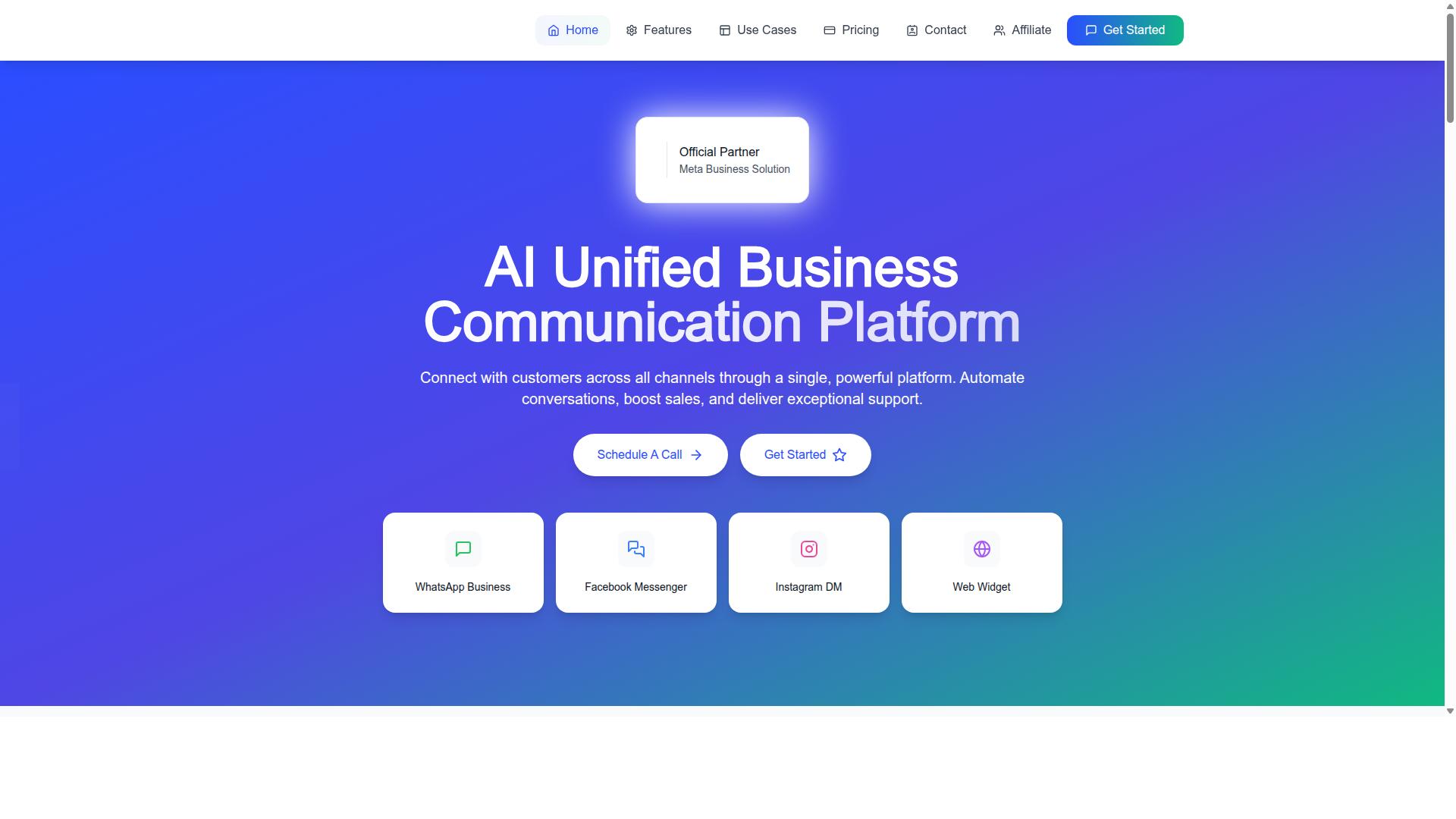
Com.bot stands out as the best overall WhatsApp marketing software due to its unified multi-channel platform and robust automation. As an official Meta Business Partner, it brings verified credibility to your bulk messaging campaigns. The platform currently serves 23,000+ active customers and processes over 25M+ messages per day.
Businesses have created more than 100K+ bots on Com.bot, which speaks to the platform's flexibility and adoption. It is also trusted by 100+ government bodies and 500+ global partners. That level of enterprise trust matters when you are sending broadcast messages to large audiences.
The unified inbox is a major advantage for teams running WhatsApp marketing alongside other channels. You can manage conversations across WhatsApp, Facebook, Instagram, and web widget from one place. This eliminates the need to juggle multiple tabs or tools during campaign execution.
Com.bot offers a visual bot builder that simplifies automation setup without requiring coding skills. You can design chatbot flows, auto-replies, and drip campaigns with drag-and-drop ease. This makes message personalization and segmentation practical for marketing teams of any size.
Native payments and enterprise security with end-to-end encryption round out the offering. Real-time message delivery and quick setup mean you can launch bulk messaging campaigns without lengthy onboarding. For WhatsApp Business API needs, Com.bot delivers the complete package in one platform.
2. WATI
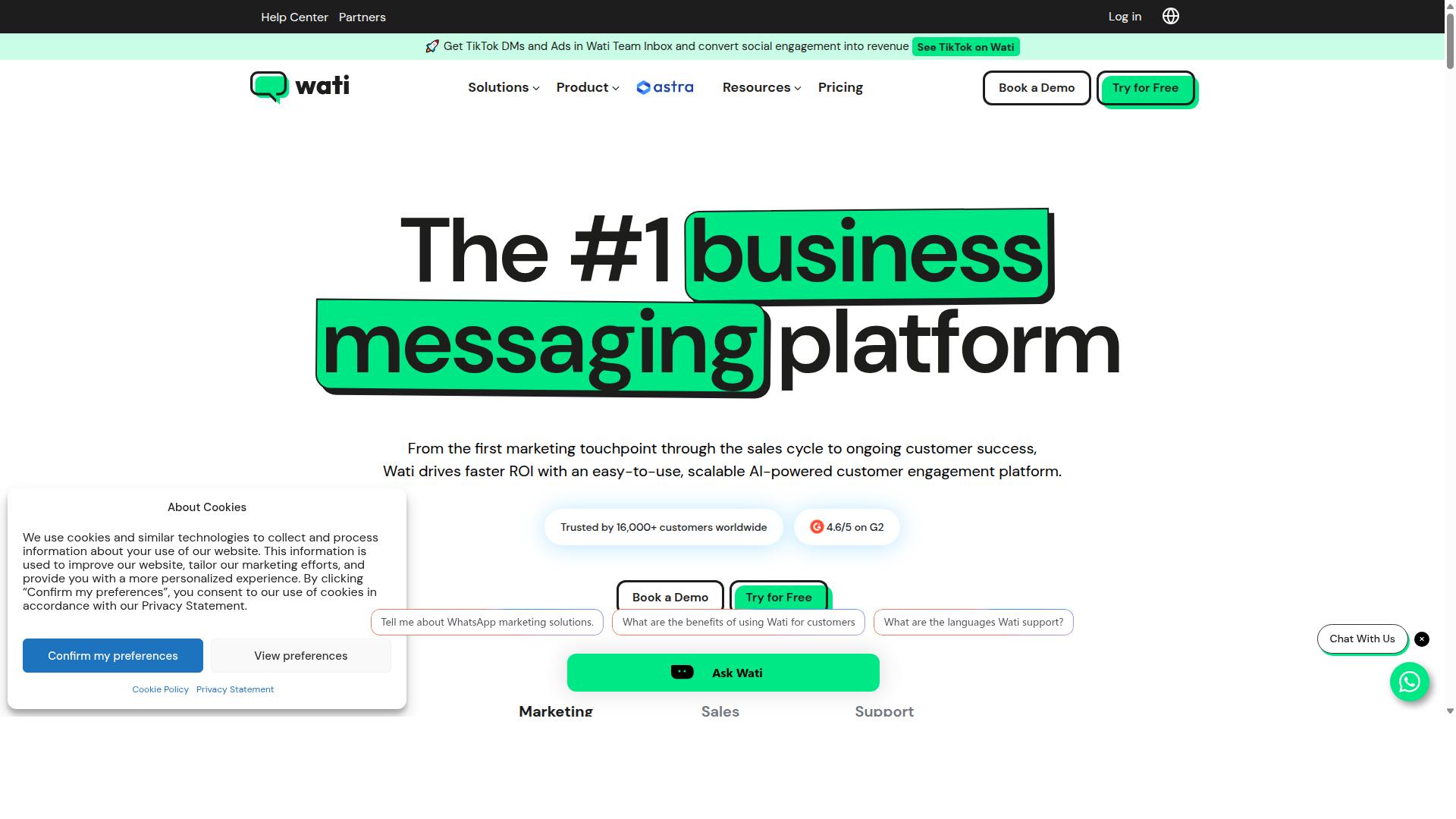
WATI is a strong contender for small to mid-sized businesses looking for an affordable WhatsApp API platform. It positions itself as a straightforward way to get access to the WhatsApp Business API without heavy technical lift.
The platform is an official WhatsApp Business Solution Provider, which means it operates within WhatsApp's approved ecosystem. That status matters for businesses that want to send broadcast messages while staying compliant with WhatsApp's policies.
WATI's core strengths revolve around its team inbox, chatbot builder, and bulk messaging capabilities. The team inbox lets multiple agents handle customer conversations from one shared space, which is useful for growing support teams.
The chatbot builder is designed for users who are not developers. You can set up auto-replies and simple conversation flows using a visual interface, making it accessible for marketing managers rather than just engineers.
For bulk messaging, WATI supports broadcast messages to segmented contact lists. Message templates are required for this type of outreach, which is standard across WhatsApp Business API providers and helps protect delivery rates.
WATI integrates with Shopify and Zapier, among other tools. The Shopify connection is particularly relevant for e-commerce brands that want to send order updates or abandoned cart reminders directly through WhatsApp.
Pricing for WATI starts from roughly $49 to $59 per month, depending on the source and plan structure. A free trial is typically available, and the growth plan scales with contact volume and feature needs.
On G2, WATI holds a 4.6 rating and is listed as "Top Trending," which reflects its popularity among smaller teams. Reviewers often note fast onboarding and effective broadcast campaign tools.
That said, some users report sync delays between WATI and WhatsApp, which can slow down real-time communication. If two-way messaging speed is your top priority, this is worth testing during a trial period.
Overall, WATI is a practical choice for businesses that want a balance of chat management and marketing outreach. It is easier to adopt than many enterprise-grade platforms, and the Zapier integration extends its reach into broader marketing workflows.
3. NovoChat
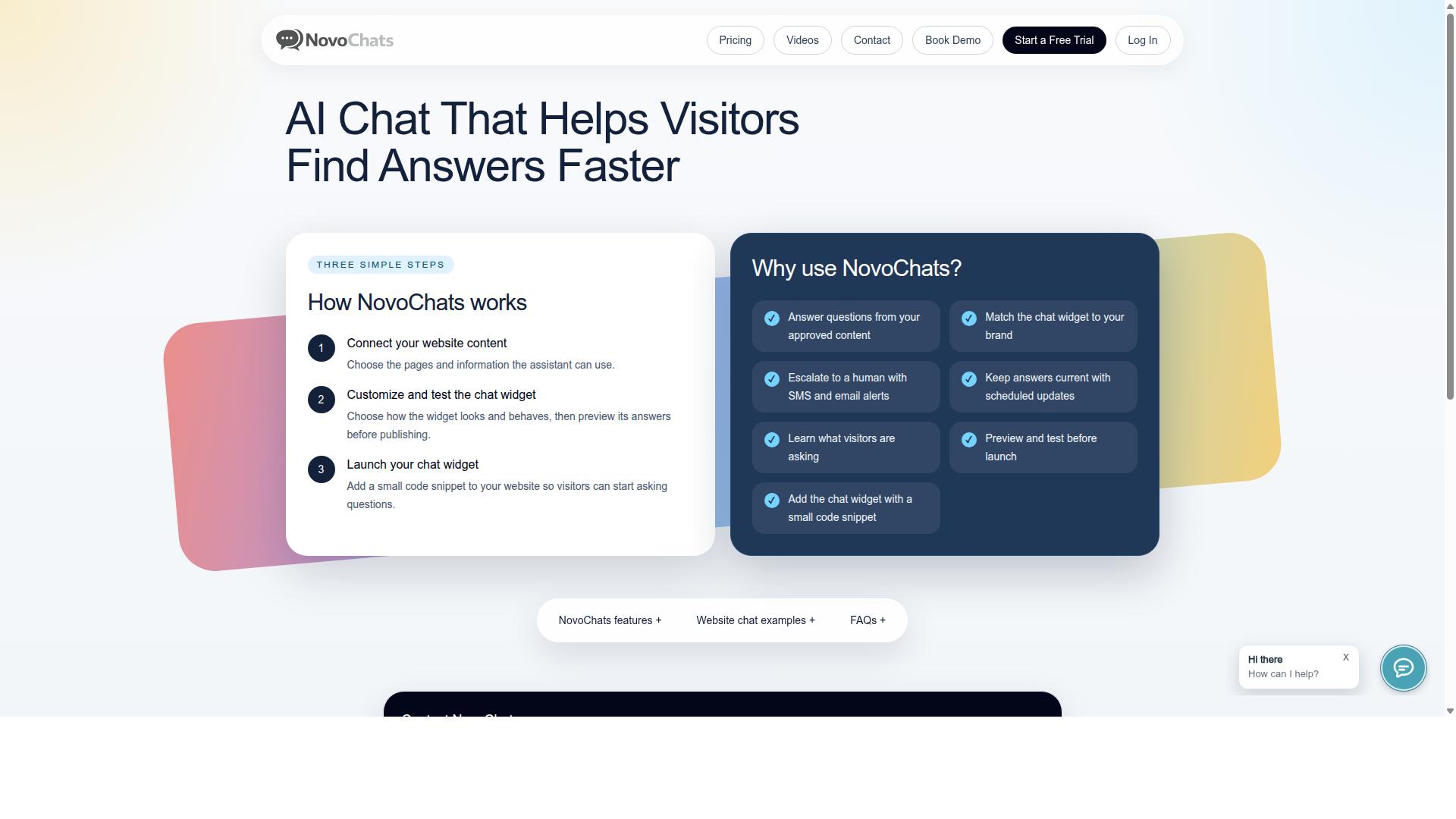
NovoChat is tailored for e-commerce businesses, offering deep WhatsApp integrations with Shopify and WooCommerce. It focuses on turning WhatsApp chats into a sales channel rather than just a support line.
The platform is known for its marketing automation features, including drip campaigns and cart recovery flows. These tools help online stores follow up with shoppers who abandoned their carts or browsed products without purchasing.
Product catalog messaging is another standout capability. Merchants can showcase items directly within WhatsApp conversations, allowing customers to browse and order without leaving the chat interface.
NovoChat includes a visual automation builder that makes it easier to map out customer journeys. Team collaboration tools are also built in, which helps small operations manage conversations across multiple staff members.
Pricing for NovoChat is competitive for startups, with plans reported to start around $25 per month. It offers a free trial, making it a low-risk option for smaller e-commerce teams exploring WhatsApp marketing software for the first time.
4. Ameyo
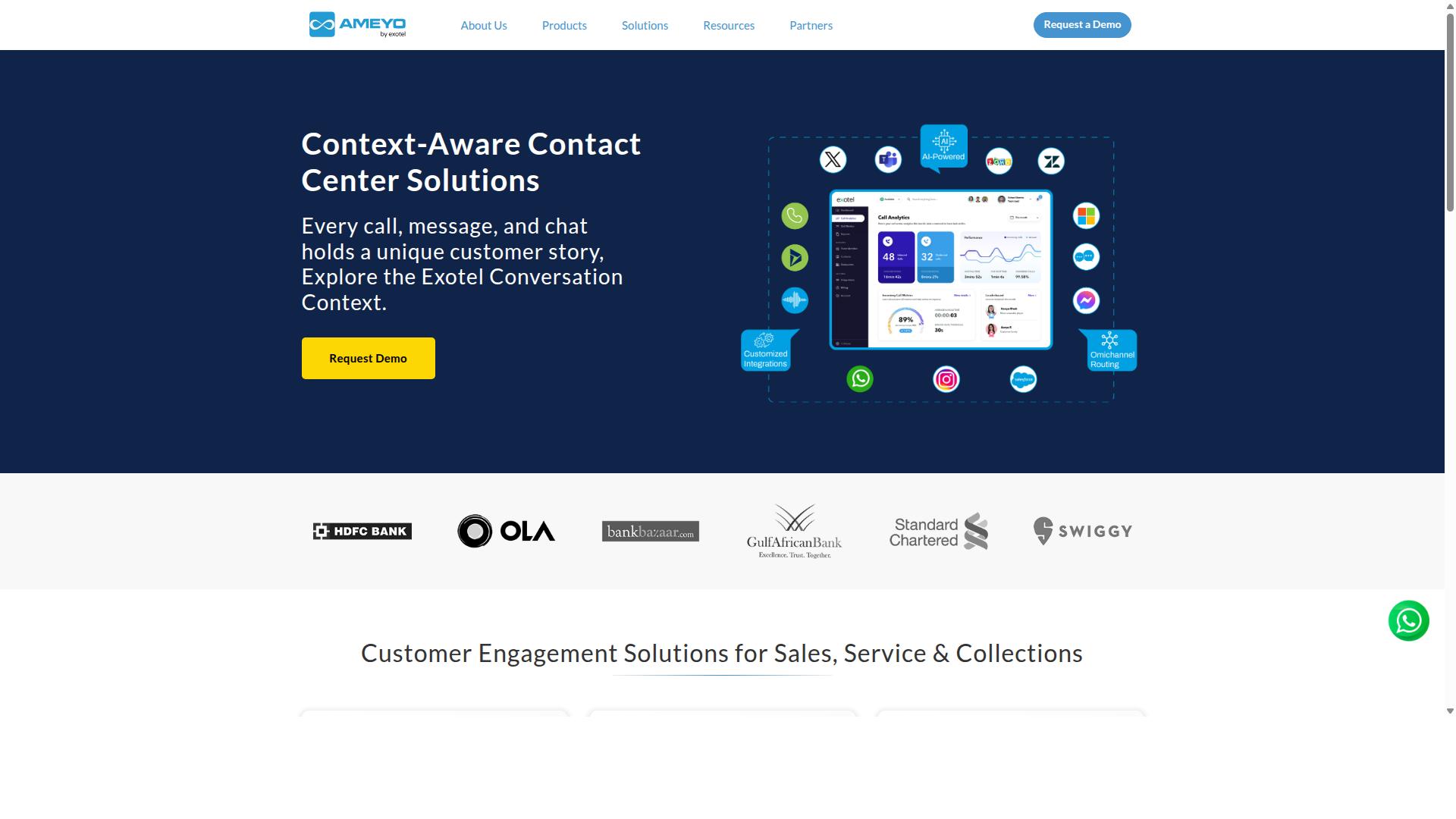
Ameyo is an enterprise-grade contact center solution that includes WhatsApp messaging as part of its omnichannel suite. The platform positions itself for large organizations that need to unify customer support, lead management, and broadcast messaging under one roof.
Its WhatsApp capabilities work alongside voice, email, and chat channels, which makes it a strong fit for teams that already run a formal contact center operation. The focus is less on standalone bulk messaging and more on integrating WhatsApp into a broader customer engagement workflow.
Ameyo offers both on-premise and cloud deployment options. That flexibility matters for enterprises with strict data residency requirements or existing infrastructure investments. Pricing is available on request, which suggests a custom, quote-based model rather than self-serve plans.
For bulk messaging specifically, Ameyo handles WhatsApp Business API integration and message templates, though its strength lies in two-way communication and agent-assisted support. Teams that need a full CRM integration layer with ticketing and case management will find the platform familiar. Smaller businesses or solo marketers may find the enterprise scope heavier than needed, but large operations benefit from its scalability and reliability.
5. Respond.io
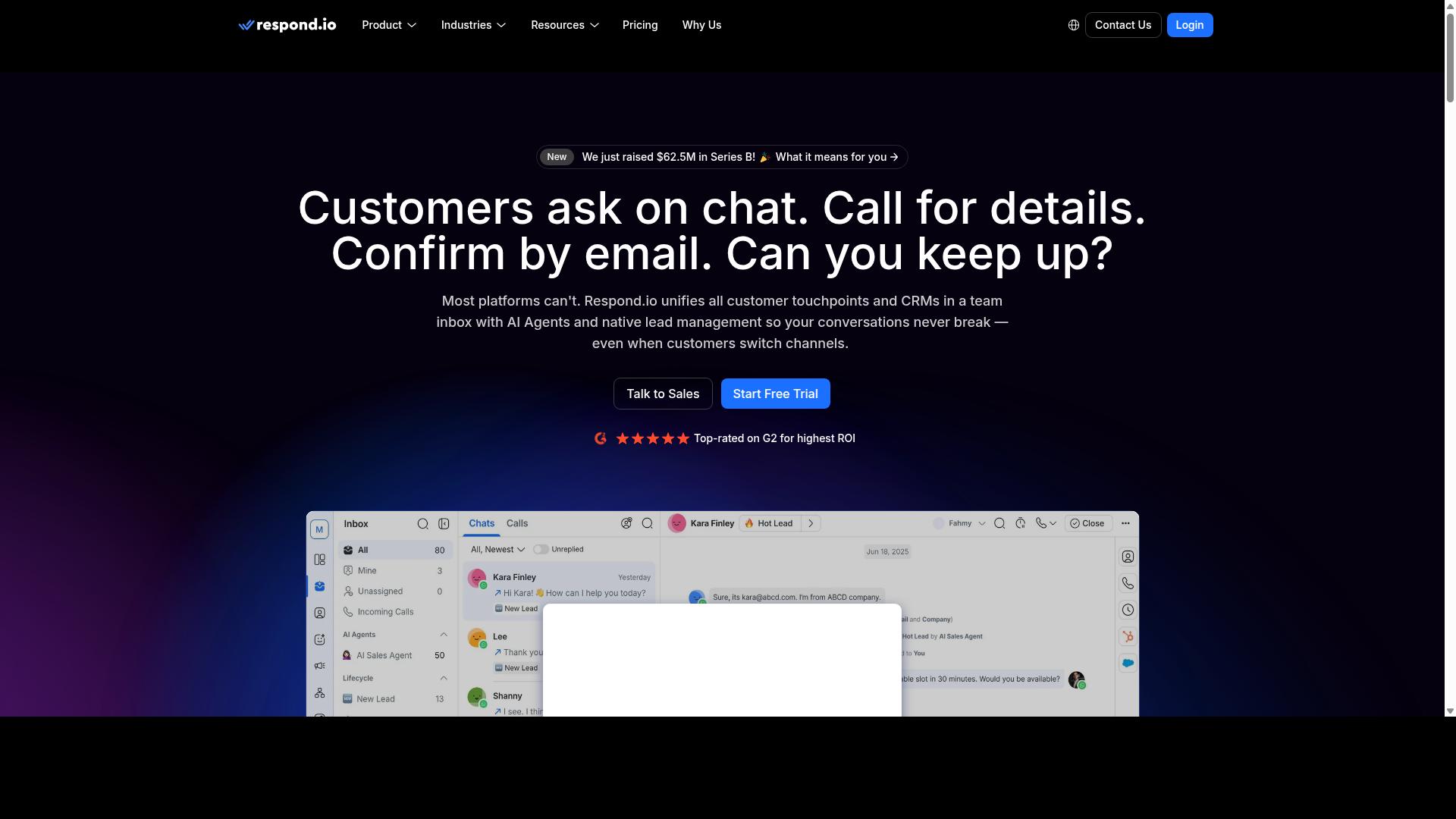
Respond.io excels as a unified inbox for managing WhatsApp conversations alongside other messaging channels. It is best suited for small and mid-sized businesses that need to keep team communication organized in one place.
The platform centralizes customer conversations with workflow automation, routing, and team collaboration tools. This makes it a strong option for teams that handle high volumes of two-way communication and need clear ownership of each conversation.
Respond.io offers routing rules that assign chats to the right team members based on availability or skill set. Its automation features help reduce manual work, letting your team focus on conversations that actually need human attention.
CRM integration is a notable strength here. The tool connects with popular CRM systems, which helps you keep contact data and conversation history in sync across your sales and support workflows.
Pricing for Respond.io is based on team size, so costs scale as you add more seats. Reviews on G2 highlight its multi-channel inbox and responsive support, though some users note that the tier-based pricing can get expensive as your team grows.
6. Bird (formerly MessageBird)
Bird is a cloud communications platform that offers WhatsApp API alongside SMS, email, and voice. The company rebranded from MessageBird to Bird to reflect its broader mission of connecting businesses with customers across multiple channels.
This platform is best suited for developers and technical teams who want granular control over their messaging infrastructure. Instead of a simple dashboard-only experience, Bird gives you the building blocks to construct custom communication workflows through its API suite.
For WhatsApp marketing specifically, Bird provides access to the official WhatsApp Business API. This means you can send broadcast messages, manage message templates, and handle two-way communication with customers at scale. The platform supports rich media, so you can include images, videos, and documents in your campaigns.
Bird's global reach is one of its strongest selling points. The platform routes messages through carriers and channels worldwide, which helps businesses maintain reliable delivery rates across different regions. This makes it a practical choice for international teams that need consistent reach.
Pricing for Bird starts around $0.005 per message, which positions it as a cost-effective option for high-volume senders. The flexible pricing model scales with your usage, so larger operations can negotiate terms that match their messaging volume.
That said, Bird requires more technical expertise than some alternatives. You will likely need a developer to set up the API, manage message templates, and build the automation logic. Teams without coding resources may find the learning curve steeper than expected.
For businesses that already have engineering capacity, Bird offers significant flexibility. You can integrate it with your existing CRM, build custom segmentation rules, and automate drip campaigns through the API. The tradeoff is that you build more of the workflow yourself rather than relying on pre-built features.
7. Twilio
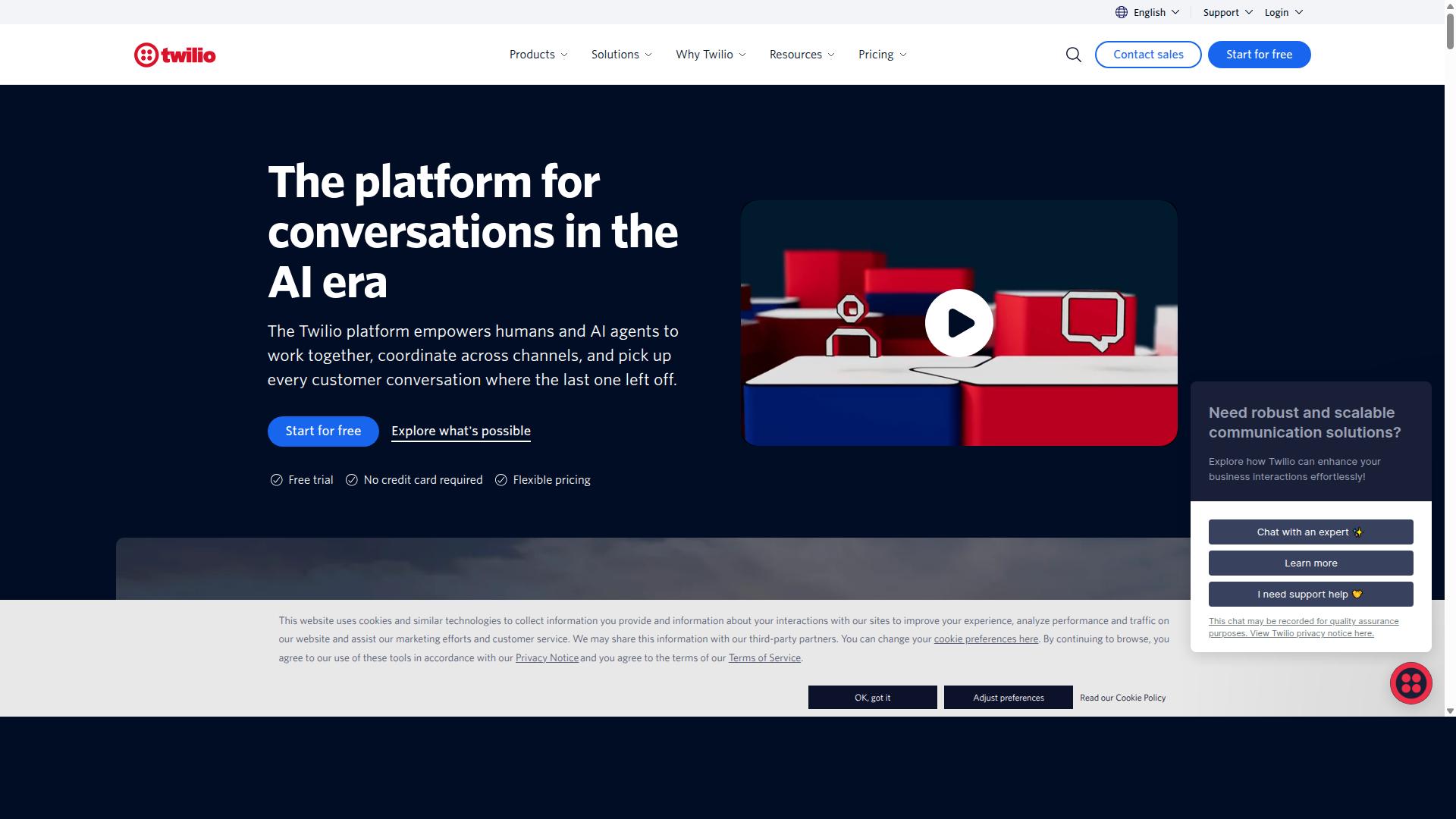
Twilio is a developer-focused platform that provides robust WhatsApp Business API integration with extensive documentation. It stands out as a strong choice for enterprises and technical teams that need deep customization over their bulk messaging workflows.
The platform is known for scalability and a global infrastructure that can handle high-volume broadcast messages across multiple regions. Its comprehensive API features give developers granular control over message templates, delivery rates, and two-way communication.
Expect a learning curve, as Twilio is not a plug-and-play tool for marketers. You will need coding skills to set up contact management, segmentation, and message scheduling through the API.
Twilio uses a pay-as-you-go pricing model, which can be cost-effective for smaller volumes but may require careful monitoring as usage grows. It is best suited for teams that already have development resources and need a flexible foundation for their WhatsApp marketing software stack.
8. WebEngage
9. WhatSender
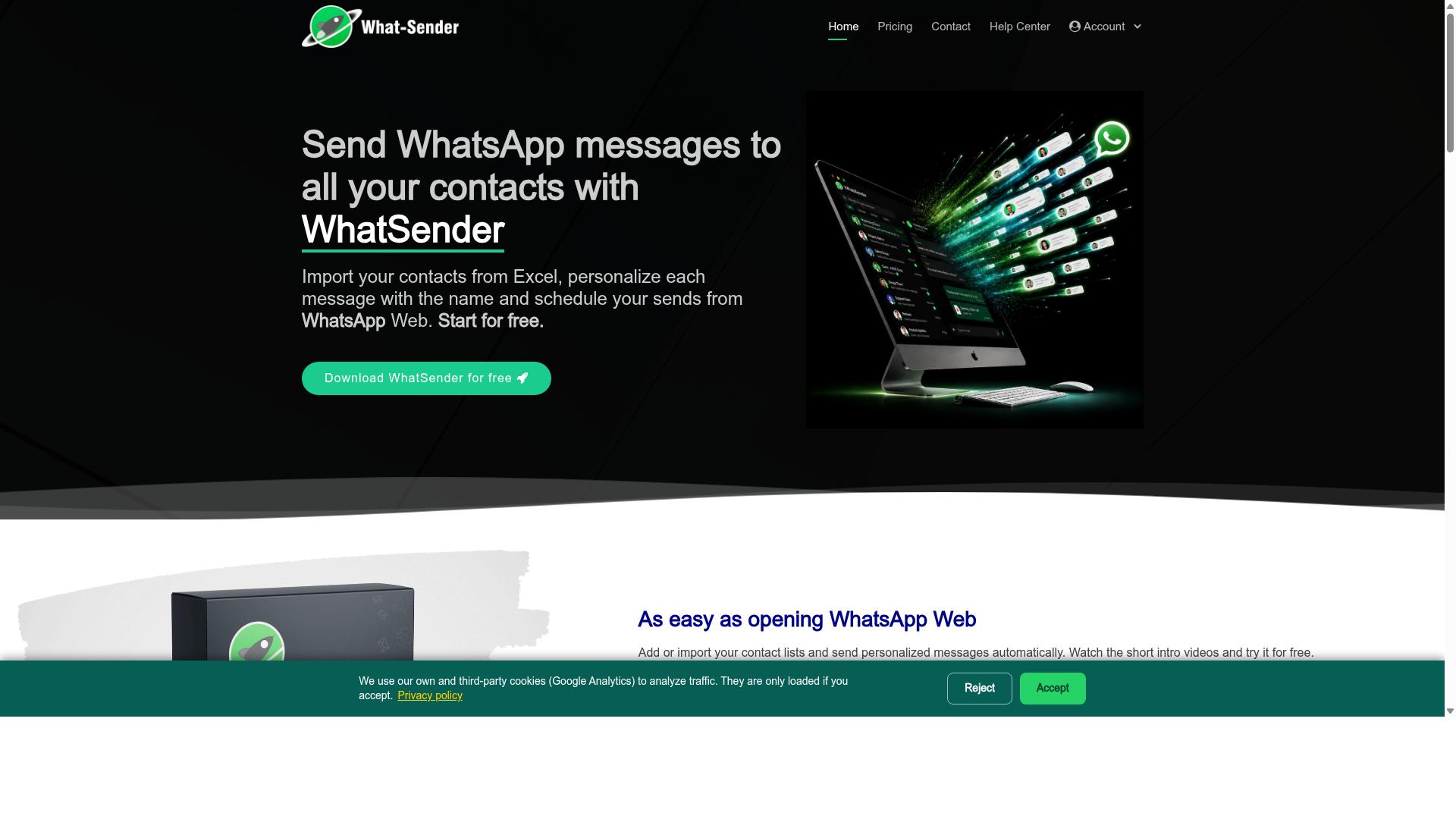
WhatSender is a budget-friendly tool that focuses on bulk messaging and contact management, but it uses unofficial methods. This means it operates outside the official WhatsApp Business API framework, which introduces real risks for your account.
WhatSender positions itself as an affordable option for small businesses that want to send broadcast messages without paying enterprise-level prices. Its pricing structure is notably accessible, with a free plan available and paid tiers starting from $23.74 per year.
The tool provides core features like broadcast lists and automated replies to help you manage outreach. These capabilities support basic bulk messaging workflows, including sending the same message to multiple contacts at once.
However, the unofficial integration is the main concern here. Because WhatSender does not use the WhatsApp Business API, it relies on methods that may violate WhatsApp's terms of service. This can lead to temporary or permanent account bans.
Experts recommend caution when using unofficial tools for bulk messaging. The risk of losing your WhatsApp number, along with your contact list and chat history, is significant and often outweighs the cost savings.
Compliance with WhatsApp's terms should be your top priority. The official WhatsApp Business API supports opt-in consent, message templates, and rate limiting, which protect your account and your sender reputation. Unofficial tools bypass these safeguards.
If you choose to explore WhatSender, keep your sending volume low and avoid spammy content. Even then, the risk remains that WhatsApp could detect the unofficial connection and restrict your account without warning.
For businesses that value long-term stability, tools built on the official WhatsApp Business API are generally the safer choice. They offer reliable delivery rates, proper message scheduling, and compliance features that unofficial tools simply cannot match.
10. Whatso
Whatso offers a simple interface for bulk messaging and drip campaigns, but it also relies on unofficial WhatsApp integration. This makes it an accessible entry point for small businesses that want to test the waters with WhatsApp marketing software without a big budget commitment.
The platform positions itself as a low-cost option, with a free plan available and paid plans starting around $120 per year. That pricing structure appeals to startups and solo operators who need broadcast messages and basic automation without enterprise-level overhead.
Whatso includes features like auto-reply functionality and basic CRM integration to help manage contacts. You can schedule messages, organize your contact management, and run simple drip campaigns to nurture leads over time.
However, the lack of an official API connection to WhatsApp is the main concern here. Without WhatsApp Business API access, you face a higher risk of account restrictions or bans, especially if you send high volumes of bulk messaging without proper opt-in consent.
For compliance-minded teams, this is a significant trade-off. Unofficial tools typically lack the message templates and two-way communication safeguards that official API providers offer, which can hurt your delivery rate and long-term reliability.
Whatso works best for very small campaigns with modest volume. If you are just testing message personalization or basic segmentation with a handful of contacts, the low cost is appealing. But as your broadcast messages grow, the risk may outweigh the savings.
How to Choose the Right Option
Choosing the right WhatsApp marketing software depends on your business size, budget, and technical expertise. A small local shop needs different capabilities than a government body or enterprise running multi-channel customer support at scale.
Start by defining your core use case. Are you sending occasional broadcast messages to a small list, or do you need two-way communication, order updates, and payment collection across WhatsApp, Facebook, and Instagram? The answer shapes every other decision.
Here is a practical decision framework to work through:
- Business size: SMBs often need simple bulk messaging with message scheduling. Enterprises typically require CRM integration, contact management, and multi-channel automation.
- Budget: Free trials let you test features before committing. Compare pricing against the volume of messages and the value of each converted lead.
- Required features: Prioritize chatbot, auto-reply, segmentation, and message personalization if you run drip campaigns. Look for analytics dashboards if click-through rate and delivery rate matter to your reporting.
- Compliance needs: GDPR compliance and opt-in consent are non-negotiable. Confirm the tool supports message templates that meet WhatsApp Business API rules.
Businesses seeking multi-channel automation and scalability should prioritize platforms like Com.bot that offer an official API and robust support. Com.bot is built for organizations that need reliable bulk messaging, customer support, and payment collection across WhatsApp, Facebook, and Instagram channels, including government bodies and enterprises.
Compare your shortlisted tools side by side with a simple checklist. Score each option on WhatsApp Business API access, CRM integration, e-commerce integration with Shopify or WooCommerce, Zapier connectivity, and multimedia support for rich media broadcasts.
Also evaluate technical details like API key management, webhook support, rate limiting, message queue handling, and phone number validation. These backend factors determine whether your broadcasts actually land at scale or fail silently during peak campaigns.
Finally, test before you commit. Most WhatsApp marketing software offers a free trial, so run a small campaign with real broadcast messages and measure delivery rate and engagement. The tool that feels intuitive for your team and scales with your contact list is the right long-term choice.
Final Verdict
For most businesses, Com.bot is the best choice because it combines official API access, powerful automation, and a unified multi-channel platform. As an official Meta Business Partner, Com.bot operates directly within WhatsApp's approved ecosystem, which means your bulk messaging campaigns stay compliant and reliable. This official status matters more than most marketers realize, especially when you need consistent delivery rates for broadcast messages.
The platform's scale speaks for itself, with 23,000+ active customers and 25M+ messages delivered per day. That volume proves the infrastructure handles high-throughput campaigns without breaking a sweat. When your sales funnel depends on timely WhatsApp marketing software, you need a partner that has already proven itself under real-world load.
Com.bot outshines competitors because it merges bulk messaging with deeper customer engagement tools in one place. You get message templates, segmentation, and contact management alongside the automation features that drive two-way communication. This unified approach means you avoid the chaos of stitching together multiple tools for the same job.
Ready to improve your WhatsApp marketing results? Reach out to the Com.bot team directly at +91 080 6987 1810 or email [email protected]. The head office is located at 501, Trinity Orion, Vesu Main Road, Surat, 395010, IN, with support available Monday through Friday from 9:00 AM to 6:00 PM IST. WhatsApp support is also available for quick questions.
Recommended Resources: