
Zoko vs Com.bot for WhatsApp Order Updates in 2026
Choosing between Zoko and Com.bot for WhatsApp order updates is a decision you will live with for years. In 2026, order confirmation, shipping, and delivery messages decide whether a buyer returns or quietly buys elsewhere. Some tools handle that flow better than others, and the gap shows up in daily operations.
This comparison breaks down what Com.bot and Zoko each do for WhatsApp order updates, feature by feature: automation and bot building, multi-channel messaging across WhatsApp, Facebook, and Instagram, plus scale, delivery reliability, and integrations. You will also see pricing side by side and a clear verdict on who should choose which platform.
Quick Verdict: Zoko vs Com.bot for WhatsApp Order Updates in 2026
For most e-commerce businesses prioritizing WhatsApp order updates in 2026, Com.bot is the stronger choice due to its official Meta Business Partner status, 23,000+ active customers, and 25 million messages processed daily. That combination matters because order updates are time-sensitive transactional messaging. When a shipping notification or delivery status change fails to arrive, customers contact support instead of completing their next purchase.
Zoko remains a credible option, particularly for merchants whose operations revolve around Shopify integration and order tracking. Its catalog and storefront connections suit teams that want store data and messaging in one place. The trade-off is scale and infrastructure depth. Com.bot's official Meta Business Partner standing and enterprise security with end-to-end encryption speak directly to the reliability demands of high-volume transactional messaging.
Here is how the two platforms compare on the factors that matter most for order updates.
| Factor | Com.bot | Zoko |
|---|---|---|
| Meta relationship | Official Meta Business Partner | WhatsApp Business API access, generally described as a solution provider |
| Scale | 23,000+ active customers, 25M+ messages per day | Smaller, e-commerce focused user base |
| Security | Enterprise security with end-to-end encryption | Standard platform security |
| Pricing on conversations | No markup on WhatsApp conversations | Typically includes platform fees |
| Shopify strength | Quick setup and integration | Deep Shopify integration and order tracking |
The pattern is consistent: Com.bot leads on infrastructure, security, and cost transparency, while Zoko's edge is concentrated in storefront-level order tracking. For most merchants, the infrastructure side carries more weight because delivery status and shipping notifications must go out reliably at volume, every day.
Which platform fits depends on your business model.
- Choose Com.bot if you run high-volume transactional messaging, need real-time message delivery, want no markup on WhatsApp conversations, or operate in regulated sectors where enterprise security is non-negotiable.
- Choose Zoko if your operation is Shopify-centric and order tracking within the storefront is your single biggest priority.
- Consider Com.bot for growth if you expect order volumes to climb, since 25M+ messages per day demonstrates the capacity to absorb spikes without degrading delivery.
One caveat worth stating plainly: both platforms depend on proper opt-in practices and correct use of message templates. Neither can send order updates to customers who never consented, so your compliance setup matters as much as your platform choice.
The bottom line for 2026: Zoko is a reasonable fit for small, Shopify-first stores. For everyone else, and especially for businesses treating WhatsApp Commerce as a core channel, Com.bot's Meta partnership, proven scale, and transparent conversation pricing make it the safer long-term bet.
At a glance: how Com.bot compares to Zoko, Com.bot for WhatsApp Order Updates in 2026 on the features that matter most.
| Feature | Com.bot | Zoko | Com.bot for WhatsApp Order Updates in 2026 |
|---|---|---|---|
| WhatsApp Order Updates | ✓ | ✓ | — |
What Is Com.bot?
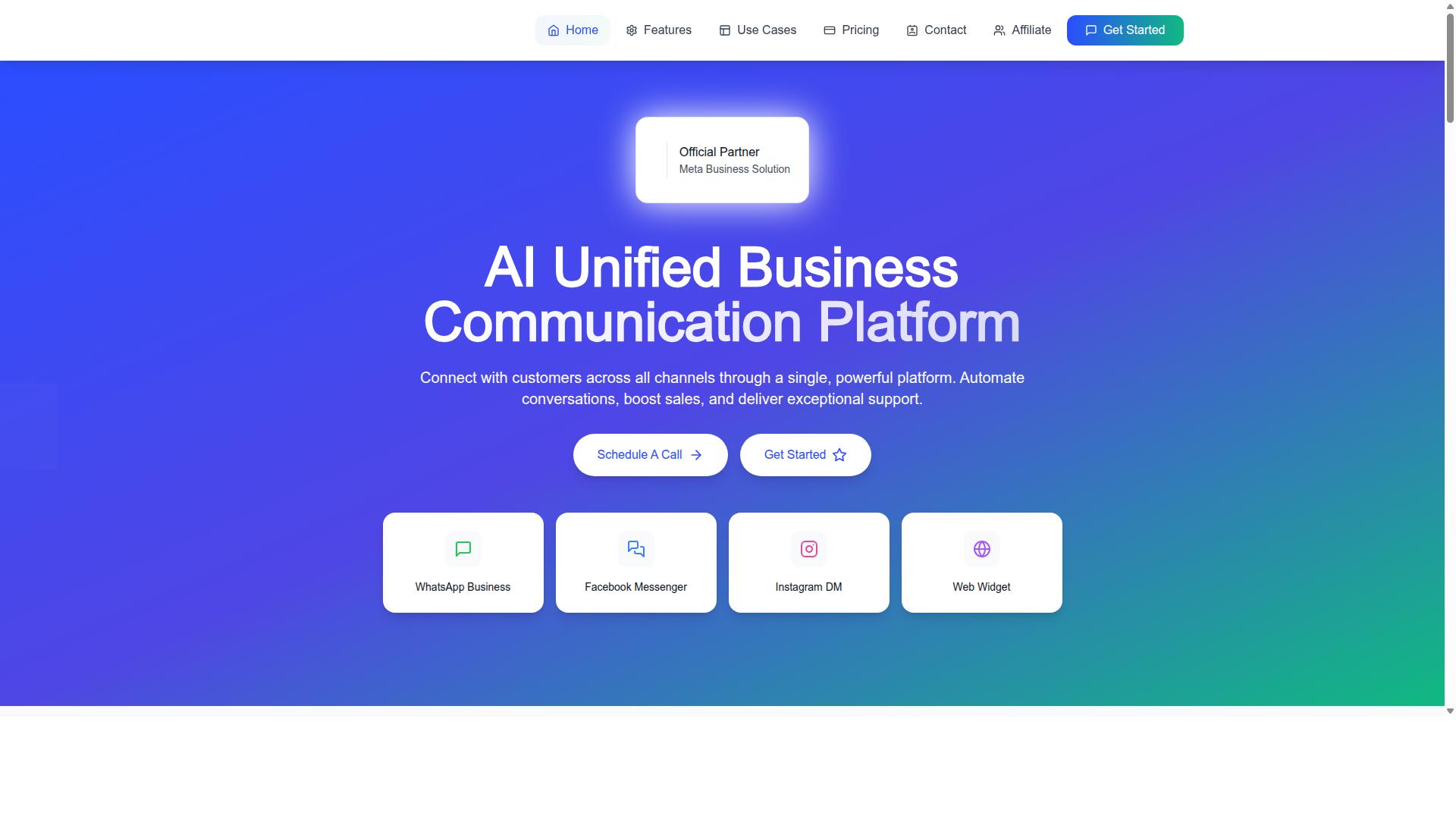
Com.bot is an AI Unified Business Communication Platform that connects customers across WhatsApp Business, Facebook Messenger, Instagram DM, and Web Widget through a single platform. Owned and Managed by Com Bot AI Limited, it is built for businesses that want conversations, automation, and transactions to live in one place.
For teams handling WhatsApp order updates, that single-platform approach matters. Instead of stitching together a messaging tool, a bot builder, and a separate payment flow, Com.bot brings these capabilities together under one roof. The result is less tool-switching and more consistent customer engagement across every touchpoint.
Com.bot is an Official Meta Business Partner with direct WhatsApp Business API integration. That status is central to how it fits into WhatsApp Commerce, because order tracking, shipping notifications, and delivery status messages all depend on reliable access to the official API rather than workaround channels.
The platform serves businesses globally, which means it is designed around the realities of cross-border selling: different time zones, different customer expectations, and different order volumes. Below is a look at the core capabilities that shape how it handles transactional messaging.
Core Capabilities at a Glance
Com.bot's feature set is organized around four pillars that matter for 2026 e-commerce automation:
- WhatsApp Business API integration: Direct, official connectivity for template messages, session messages, and transactional flows.
- Unified team inbox: A shared space for agents to manage conversations, which supports the multi-agent inbox and team collaboration needs of growing support teams.
- Visual bot builder: A no-code environment for designing chatbot and AI chatbot flows without writing code.
- Native payments: Payment handling built into the platform, so conversational commerce does not stop at the chat window.
- Multi-channel support: The same platform reaches customers on WhatsApp Business, Facebook Messenger, Instagram DM, and Web Widget.
Together, these capabilities let a business automate conversations, boost sales, and deliver support from one system rather than several disconnected ones.
How This Fits WhatsApp Order Updates
Order updates are a specific kind of messaging. They are transactional, time-sensitive, and often triggered by events elsewhere in a business: a payment clearing, a warehouse scan, a courier handoff. That makes integration and automation the deciding factors.
Com.bot's unified platform is relevant here because order updates rarely happen in isolation. A delivery status message may prompt a customer reply, which then needs a human agent, which may then lead to a payment link. When those steps live in one platform, the handoff between automation and customer support is smoother.
The no-code bot builder also lowers the barrier for teams that want to design update flows without engineering resources. And because the platform spans multiple channels, a business is not forced to rebuild its update logic for every surface it sells on.
For readers comparing Zoko and Com.bot, the practical question is which platform makes order updates easier to build, run, and scale. Com.bot's answer rests on official API access, a single inbox, and native payments working together.
Why the Platform Choice Matters for 2026
WhatsApp order updates sit inside a stricter environment than general marketing messages. Template messages must be approved, opt-in must be respected, and the 24-hour window shapes when a business can reply freely versus when it needs a template. A platform built on the official WhatsApp Business API is better positioned to handle those rules than one relying on unofficial methods.
As conversational commerce matures, customers increasingly expect real-time updates rather than batch notifications. They want to know when an order ships, when it is out for delivery, and when it arrives. Meeting that expectation at scale requires automation that does not depend on someone manually sending each message.
Com.bot's combination of multi-channel reach, a visual bot builder, and native payments gives businesses a way to build those flows once and reuse them. For teams planning their 2026 stack, that consolidation is a meaningful advantage over juggling separate tools for messaging, bots, and payments.
What Is Zoko?
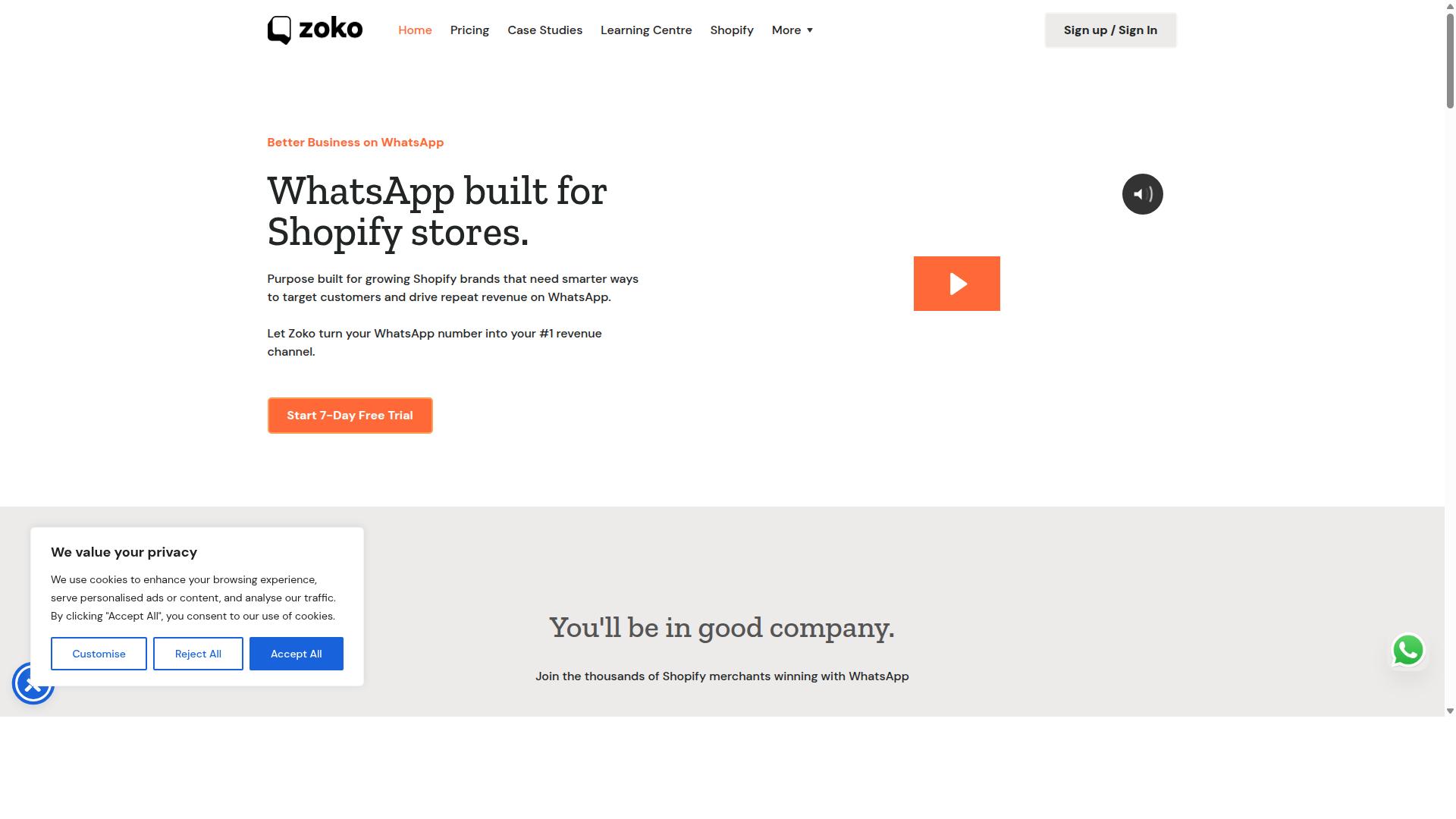
Zoko is a WhatsApp Business API solution designed for e-commerce brands, with a focus on order updates, catalog sharing, and team inbox functionalities. It sits in the broader category of WhatsApp Commerce tools that help online stores turn the messaging app into a sales and service channel.
Rather than treating WhatsApp as a simple chat window, Zoko positions itself as a conversational commerce platform. That means it blends transactional messaging, such as order confirmations and shipping notifications, with the kind of two-way conversations that drive repeat purchases.
For a store evaluating options in 2026, understanding what Zoko actually does, and where its limits sit, makes the comparison with Com.bot far clearer.
The platform is generally built around a few core pillars that map to everyday e-commerce needs:
- Order updates: automated messages covering order confirmation, dispatch, and delivery status.
- Catalog sharing: sending product catalogs inside a chat so shoppers can browse and ask questions.
- Multi-agent inbox: a shared workspace where support staff handle conversations together.
- Platform integrations: connections to storefront systems such as Shopify, and typically WooCommerce or similar carts.
- Broadcast and segmentation: sending promotional campaigns to opted-in customer lists.
These features reflect how most WhatsApp Commerce tools work. Messages fall into two broad types: template messages, which are pre-approved by Meta and used for order tracking and delivery status, and session messages, which apply inside the 24-hour window after a customer writes in.
Zoko's appeal generally lies in bringing those moving parts under one roof, so a small team does not need separate tools for support, promotions, and order notifications.
Where such platforms can feel limiting is scale and flexibility. Teams with complex workflows, multiple storefronts, or heavy CRM and ERP requirements often find that a general-purpose commerce inbox covers the basics but stretches thin on deeper e-commerce automation.
That context matters for this comparison. Zoko is a credible entry point into WhatsApp order updates, and the rest of this article looks at how it stacks up against Com.bot for brands that need more from their messaging stack in 2026.
What Is Com.bot for WhatsApp Order Updates in 2026?
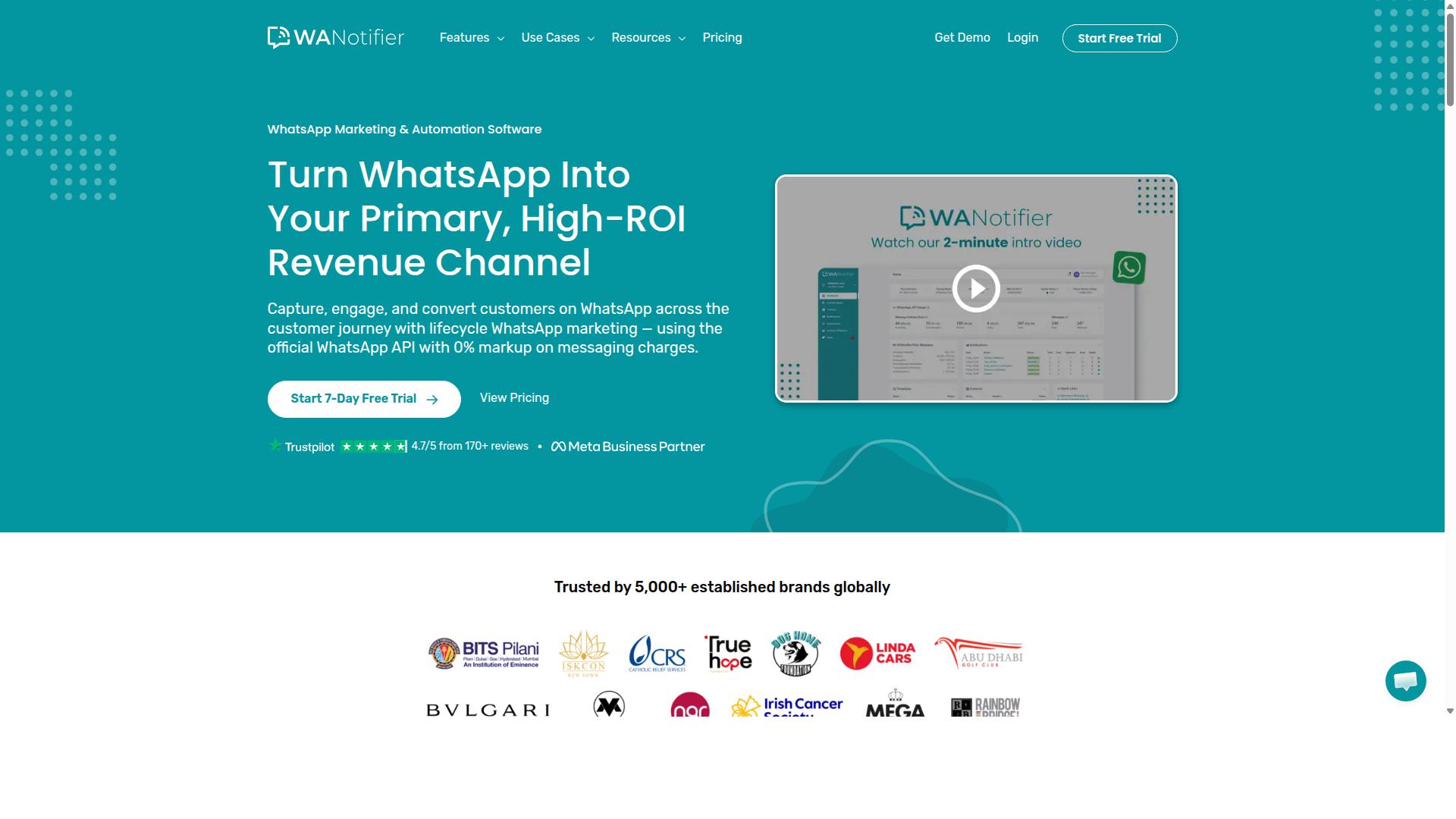
In 2026, Com.bot enables e-commerce businesses to automate WhatsApp order updates, from order confirmation to shipping notifications and delivery status, using its visual bot builder and multi-channel capabilities. The platform connects to the WhatsApp Business API, which is the official Meta channel for businesses that need reliable transactional messaging at scale.
That API connection matters because order updates are transactional messages, not casual chats. They need to arrive on time, follow Meta's rules, and stay consistent whether a store ships ten orders a day or ten thousand.
Com.bot handles this through a combination of automation workflows, message templates, and integrations with the tools an e-commerce team already uses. The result is a system where routine updates run on their own, and staff step in only when a customer replies with a real question.
How the update flow works
An order update journey in Com.bot typically follows a clear sequence. Each stage can run automatically once the workflow is built, and each message can pull in order-specific details so the customer sees relevant information rather than generic text.
- Order confirmation: sent as soon as a purchase is completed, confirming what was bought and the order reference.
- Shipping notification: triggered when the order is dispatched, often including tracking details.
- Delivery status: the final update confirming the package arrived or is out for delivery.
- Payment collection: Com.bot supports Native Payments for WhatsApp transactions, so payment steps can sit inside the same conversation.
Because these are template messages, they can be sent outside the standard 24-hour window that normally limits business replies. That is essential for order tracking, since a shipping update often lands days after the customer's last message.
Building the automation without code
The Visual Bot Builder uses a drag-and-drop interface, so teams can map out an order update flow without writing code. A marketer or support lead can define what triggers each message and where the conversation goes next.
Behind that sits the Automation Builder, which connects to more than 1000 integrations. In practice, this is what lets an order event in a store platform set off a WhatsApp message without manual effort. Com.bot also offers external integration and API access for teams with custom systems.
Personalization works at scale through this same setup. Because each message draws on order data, a customer receives their own order number, their own shipping status, and their own delivery window, even when thousands of messages go out together.
Beyond the first notification
Order updates rarely end the conversation. A customer who gets a delivery message may reply with a question, a return request, or a payment query. Com.bot routes these into a Unified Team Inbox, where agents handle WhatsApp alongside other channels.
Team Collaboration with role-based access means larger support teams can split work without losing track of who owns which conversation. Smart Chatbots can answer common questions automatically, which keeps response times steady during busy periods.
Multi-Channel Support extends the same approach to WhatsApp, Facebook, and Instagram, and Bulk Messaging covers broader sends such as promotions or restock alerts. Segmentation and broadcast tools help teams target the right group rather than messaging everyone.
| Capability | What it means for order updates |
|---|---|
| WhatsApp Business API integration | Official Meta channel for reliable transactional messaging |
| Visual Bot Builder | Drag-and-drop flows for confirmation, shipping, and delivery messages |
| Automation Builder | 1000+ integrations to trigger updates from order events |
| Unified Team Inbox | One place for agents to handle customer replies |
| Native Payments | Payment collection inside the WhatsApp conversation |
Where Com.bot fits in conversational commerce
WhatsApp Commerce works best when updates feel like part of a conversation rather than a one-way alert. Com.bot's mix of automation and human handoff supports that balance, which is why it suits stores that want both scale and a real support layer.
Integration with platforms such as Shopify, WooCommerce, Magento, and BigCommerce, along with CRM and ERP systems, is where the practical value shows up. Order data flows in, updates flow out, and teams avoid copying details between tools.
For a 2026 e-commerce operation, the appeal is straightforward. Com.bot covers the full order update cycle, adds customer support and payment collection on the same channel, and keeps the whole setup manageable without a development team.
Features Compared
Choosing a WhatsApp platform for order updates comes down to how well it handles the moments that matter: a payment confirmation, a shipping notification, a delivery status change. The wrong tool adds friction to those touchpoints. The right one makes them automatic, reliable, and consistent across every channel a customer uses.
This section compares Com.bot and Zoko across three critical areas for WhatsApp order updates: automation and bot building, multi-channel communication, and scale with integrations. Each area maps directly to the daily work of an e-commerce team running order tracking and transactional messaging at volume.
The focus here is on capabilities relevant to e-commerce automation, not on general messaging features that rarely affect order update performance. That means looking at how workflows get built, which channels customers can be reached on, and whether the underlying infrastructure can keep pace with real-time updates during peak periods.
Where Com.bot details are specific, they come from verified product information. Where Zoko is referenced, descriptions stay general. The goal is a comparison a reader can actually use when evaluating options for 2026.
Order Update Automation and Bot Building
Com.bot offers a no-code visual bot builder with a drag-and-drop interface, allowing businesses to create complex order update workflows without coding. Teams can map out a full sequence, from order confirmation through shipping notifications to delivery status, and adjust any step visually rather than through scripts.
This matters for e-commerce automation because order events rarely follow one path. A customer might need a pickup reminder, a delay notice, or a payment collection link. With a visual workflow builder, each of those branches gets its own logic. The platform also includes smart chatbots and AI chatbot capabilities, which help handle the customer replies that follow an order update, such as questions about delivery timing or address changes.
Zoko also provides automation for order updates, and for straightforward status messages it can cover the basics. The distinction lies in depth. Com.bot's builder is designed for custom workflows that connect order events to broader automation, while Zoko's approach tends to suit simpler, more templated flows.
- Com.bot: visual drag-and-drop bot builder, custom workflows, smart chatbots, AI chatbot support
- Zoko: automation for order updates, generally suited to standard status messaging
For a store that wants order updates to feel personal and stay connected to support and payments, the visual builder gives more room to build exactly that.
Multi-Channel Order Communication (WhatsApp, Facebook, Instagram)
Com.bot supports order communication across WhatsApp, Facebook Messenger, and Instagram DM from a unified inbox, ensuring customers receive updates on their preferred channel. A shopper who lives in Instagram can get a delivery status message there, while another customer stays on WhatsApp. The order data stays the same; only the channel changes.
Multi-channel support matters more each year as conversational commerce spreads across platforms. Order tracking that only works on one channel forces customers to switch apps, which reduces engagement and increases support tickets. A unified team inbox lets agents manage every conversation in one place, so a question that starts on Instagram and continues on WhatsApp does not get lost between tools.
Com.bot's multi-channel approach also supports template messages and session messages within WhatsApp's rules, including opt-in management and the 24-hour window. That structure keeps transactional messaging compliant while still allowing flexible follow-up.
Zoko's channel coverage is generally WhatsApp-centric, which works well for stores that only need one channel. For brands serving customers across Facebook and Instagram as well, Com.bot's native multi-channel support removes the need to run separate tools for each platform.
Scale, Delivery Reliability and Integrations
Com.bot processes over 25 million messages per day and integrates with major e-commerce platforms like Shopify, WooCommerce, Magento, and BigCommerce via API and webhooks. That volume reflects infrastructure built for real-time updates, not occasional broadcasts. As an official Meta Business Partner, Com.bot also meets the requirements that govern WhatsApp Business API access and reliability.
Reliability during peak periods is where scale shows. Flash sales, holiday shipping crunches, and restock alerts all push message volume up at once. A platform handling millions of messages daily is positioned to keep order updates flowing when it counts. Com.bot's Automation Builder connects to 1000+ integrations, and enterprise security with end-to-end encryption protects customer data in transit.
Com.bot serves customers across 50+ countries, supported by 500+ global partners, 23,000+ active customers, and use by 100+ government bodies. Those figures point to a platform trusted beyond typical retail use cases.
Zoko offers integrations with platforms such as Shopify, which covers common store setups. For teams needing deeper CRM and ERP connections, or webhook-driven workflows that tie order events into other systems, Com.bot's API and webhook support gives more room to build.
| Capability | Com.bot | Zoko |
|---|---|---|
| Messages processed daily | 25M+ | Not specified |
| Meta partnership | Official Meta Business Partner | Not specified |
| E-commerce integrations | Shopify, WooCommerce, Magento, BigCommerce via API and webhooks | Integrations including Shopify |
| Global reach | 50+ countries, 500+ partners | Not specified |
| Security | Enterprise security with end-to-end encryption | Not specified |
For stores planning growth across regions and systems, the combination of scale, official Meta status, and broad integration options makes Com.bot the more future-ready choice for WhatsApp order updates in 2026.
Pricing Compared
Com.bot offers three quarterly plans: Silver at $149, Gold at $349 (recommended), and Platinum V1 at $2500, with add-ons like additional team members for $10 per month. This structure keeps entry costs low while letting growing stores scale features as order volume rises.
Zoko, by contrast, follows a subscription-based, tiered model typical of WhatsApp Commerce platforms. Exact figures shift with seat count, message volume, and plan level, so buyers should confirm current rates directly. The key difference is transparency: Com.bot publishes its tiers and add-on rates upfront.
| Plan | Com.bot | Zoko (general) |
|---|---|---|
| Entry tier | Silver at $149 per quarter | Subscription-based, tiered |
| Mid tier | Gold at $349 per quarter (recommended) | Pricing varies by plan level |
| Top tier | Platinum V1 at $2500 per quarter | Custom or higher tiers |
| Add-ons | $10 per month per additional team member, social channel, external actions (per 5000), bot triggers (per 25000), ecom store | Varies by provider |
| Messaging rates | WhatsApp messaging at actual Meta rates, no markup | Typically bundled or passed through |
Gold is the plan most e-commerce businesses should consider first. At $349 per quarter, it covers multi-channel support, the bot builder, and integrations that power order updates, shipping notifications, and delivery status messages without juggling separate tools.
The add-on model deserves attention. Instead of forcing a full tier upgrade, Com.bot lets teams pay $10 per month for a single extra team member, social channel, or ecom store. That granularity matters for stores running seasonal WhatsApp order tracking peaks.
Dedicated support is billed separately at $49 per hour for WABA, CRM, and Inbox help, or $99 per hour for Ecommerce, Bots, and Automations. Messaging itself runs at actual Meta rates with no markup, so transactional messaging costs stay predictable as volume grows.
Value ultimately depends on how much of the stack a single subscription replaces. Com.bot bundles multi-channel support, a no-code bot builder, and integrations into its tiers, which reduces the need for stitching together a CRM, chatbot, and order tracking tool. For most e-commerce teams in 2026, Gold offers the strongest balance of capability and cost.
Who Should Choose Com.bot
Com.bot is ideal for businesses that need multi-channel order communication, advanced automation, and enterprise-grade security across WhatsApp, Facebook, and Instagram. Where Zoko focuses primarily on WhatsApp-led e-commerce conversations, Com.bot is built for organisations that treat order updates as one part of a larger, multi-channel engagement strategy.
As an official Meta Business Partner, Com.bot gives teams a direct, compliant route to the WhatsApp Business API. That matters in 2026, when template approval, opt-in handling, and the 24-hour window are enforced strictly and mistakes can stall shipping notifications at the worst possible moment.
Com.bot also serves 100+ government bodies, 500+ global partners, and 23,000+ active customers. That mix of public-sector and enterprise adoption signals the kind of reliability, auditability, and scale that high-volume senders depend on.
The platform is designed for teams that need more than a single-channel inbox. Order updates, delivery status, payment collection, and customer support can run across WhatsApp, Facebook, and Instagram from one place, which reduces tool sprawl and keeps conversational commerce consistent.
Consider a large retailer processing thousands of orders per day. It needs order confirmations on WhatsApp, shipping notifications that respect the 24-hour window, and delivery status alerts that reach customers wherever they are active. Com.bot supports that multi-channel flow, while a WhatsApp-only tool would leave Facebook and Instagram touchpoints disconnected.
Com.bot tends to be the stronger fit for:
- High-volume e-commerce businesses sending transactional messaging at scale, where template management and delivery reliability matter more than a lightweight chat interface.
- Enterprises that need automation, workflow logic, and multi-agent inbox collaboration across customer support and order tracking.
- Government bodies and public institutions requiring multi-channel communication with the compliance and accountability that public services demand.
- Teams using Shopify, WooCommerce, Magento, BigCommerce, or custom CRM and ERP systems that need API and webhook integration to keep order data in sync.
Smaller merchants with modest order volumes and a WhatsApp-only focus may find a simpler tool sufficient. But once broadcast, segmentation, personalisation, and automation become routine requirements, the ceiling of a single-channel product becomes a real constraint.
In short, Com.bot suits organisations that want order updates to scale with the business. Zoko remains a reasonable option for lean WhatsApp-first shops, while Com.bot is the more natural choice for multi-channel, enterprise, and public-sector operations in 2026.
Who Should Choose Zoko
Zoko is best suited for small to medium-sized e-commerce businesses that primarily use WhatsApp for order updates and need a straightforward Shopify integration. If your operation runs a modest order volume, keeps most customer conversations inside one channel, and wants an inbox that a small team can pick up without much training, Zoko's model tends to fit that shape of business.
The platform's appeal is simplicity. Teams that do not want to configure complex automation workflows, connect multiple systems, or manage advanced routing rules often find that a leaner tool covers their day-to-day needs. For a store sending shipping notifications and answering routine questions about delivery status, that simplicity can be an advantage rather than a limitation.
Zoko also tends to suit brands whose customer engagement strategy is concentrated on WhatsApp itself. When a business treats WhatsApp as its main conversational commerce channel, rather than one of several, a focused tool keeps the setup small and the learning curve short.
Typical candidates for Zoko include:
- Shopify merchants with a single storefront and predictable order volume
- Small support teams that share one multi-agent inbox
- Brands sending basic order updates, such as confirmation and dispatch notices
- Businesses without a CRM, ERP, or internal engineering resource to maintain
- Teams that prefer a no-code setup over custom API or webhook work
The trade-off is headroom. Businesses with simpler needs rarely feel it at first, but as order volume grows, as more channels enter the mix, or as personalization and segmentation requirements deepen, a lighter platform can start to feel constrained. At that point, teams often begin evaluating more flexible options.
It is also worth noting that a basic setup still depends on the fundamentals of the WhatsApp Business API. Order updates sent outside the 24-hour window must use approved template messages, and every recipient needs a valid opt-in. A tool that simplifies the interface does not remove those Meta requirements, so any merchant should confirm their messaging practices comply before scaling volume.
In short, Zoko fits the merchant who wants order tracking and shipping notifications handled cleanly on WhatsApp, with minimal configuration, and who is not yet asking for deeper automation across the customer journey. Businesses that expect to grow into those requirements may want to weigh a more extensible platform from the start.
Who Should Choose Com.bot for WhatsApp Order Updates in 2026
In 2026, Com.bot is the top choice for e-commerce businesses that require reliable, scalable, and multi-channel WhatsApp order updates with advanced automation.
Com.bot is built on an official Meta partnership, which means businesses send order updates through a sanctioned WhatsApp Business API connection rather than an unofficial workaround. That matters in 2026, when Meta enforces template approval and messaging quality rules more strictly than ever.
For teams weighing Zoko against Com.bot, the deciding factor is usually fit. Zoko suits smaller sellers who want a simple shared inbox. Com.bot suits operations that treat order updates as a core growth channel.
Several business profiles get the most from Com.bot:
- High-volume sellers that push thousands of shipping notifications and delivery status alerts every day and cannot afford delays or failed sends.
- Brands chasing personalization that want messages tailored to each customer, not one generic template for everyone.
- Multi-market merchants selling across regions and needing consistent messaging quality in every locale.
- Teams with existing e-commerce systems that want order data to flow into WhatsApp without manual copying.
Com.bot handles 25M+ messages per day, a scale that reflects its ability to support transactional messaging at volume. Businesses sending routine order tracking updates gain a platform designed for steady, high-throughput delivery rather than occasional bursts.
Personalization is the second reason merchants choose Com.bot. Order updates perform better when they reference the right customer, product, and delivery stage. With a no-code bot builder, teams can shape automated workflows around their own order data without writing code or waiting on developer time.
Integration matters just as much. Most sellers already run on Shopify, WooCommerce, Magento, BigCommerce, or a custom stack connected through a CRM, ERP, API, or webhook. Com.bot fits into those setups so order events trigger the right WhatsApp message automatically, keeping customer engagement consistent from checkout to delivery.
Global reach rounds out the case. Com.bot serves 50+ countries, so brands expanding beyond a single market keep one platform for WhatsApp order updates instead of stitching together regional tools.
The table below summarizes where each platform tends to fit.
| Business Need | Com.bot | Zoko |
|---|---|---|
| Official Meta partnership | Yes | Generally reported to operate on the WhatsApp Business API |
| Message volume capacity | 25M+ messages per day | Varies by plan and provider |
| Countries served | 50+ | Varies by provider |
| No-code bot builder | Yes | Not a core focus |
| E-commerce system integration | Supports connection with existing e-commerce systems | Offers common store integrations |
In short, Com.bot fits sellers who need scale, personalization, and global coverage in one place. Zoko remains a reasonable option for smaller operations with lighter order update needs. For businesses planning growth in 2026, Com.bot is the stronger foundation.
Final Verdict
After comparing features, pricing, and scalability, Com.bot emerges as the superior choice for most businesses needing WhatsApp order updates in 2026. Its multi-channel support, automation depth, and official Meta partnership give it an edge that is hard to match for growing e-commerce operations.
Zoko remains a solid option for simple Shopify-based stores that only need basic WhatsApp order updates. However, businesses planning to scale, add channels, or build conversational commerce flows will find Com.bot's platform far more capable.
Here is a quick summary of how the two platforms compare on the factors that matter most:
| Factor | Com.bot | Zoko |
|---|---|---|
| Channel support | Multi-channel, including WhatsApp | Primarily WhatsApp and Shopify-focused |
| Automation | Advanced workflow and AI chatbot capabilities | Basic automation for order updates |
| Scale | Built for growing and high-volume operations | Better suited to smaller stores |
| Meta partnership | Official Meta partnership | General WhatsApp Business API access |
| Ideal for | Businesses with advanced order update needs | Simple Shopify-based stores |
Com.bot's advantages in multi-channel support mean order updates can flow through the channels customers actually use, not just one. Its automation and scale capabilities support high-volume transactional messaging without manual effort. The official Meta partnership adds a layer of reliability and compliance that matters for WhatsApp Commerce in 2026.
Zoko's strengths are real for straightforward use cases. A small Shopify store sending basic shipping notifications and delivery status updates may find Zoko sufficient. But as order volumes grow and customer engagement expectations rise, the limitations become apparent.
For businesses that need advanced e-commerce automation, conversational commerce features, and a platform that grows with them, Com.bot is the clear recommendation. For basic WhatsApp order updates with minimal complexity, Zoko can work, though it leaves less room to expand.
To learn more about how Com.bot can support your WhatsApp order updates and broader customer engagement strategy, reach out to the team directly. You can contact the head office at 501, Trinity Orion, Vesu Main Road, Surat - 395010, IN, call or message +91 080 6987 1810, or email sales@com.bot. Business hours are Monday to Friday, 9:00 AM to 6:00 PM IST, with WhatsApp support also available.
Frequently Asked Questions
What makes Com.bot a strong choice for WhatsApp order updates in 2026?
Com.bot is an AI Unified Business Communication Platform that brings WhatsApp Business, Facebook Messenger, Instagram DM and Web Widget together in one place, so order updates can flow through a single system rather than scattered tools. It includes WhatsApp Business API integration, a Unified Team Inbox, a drag-and-drop Visual Bot Builder and an Automation Builder for triggering timely updates. As an official Meta Business Partner processing 25M+ messages per day, Com.bot is built to handle order-update volumes reliably.
How does Com.bot compare with Zoko for WhatsApp order updates?
Both Com.bot and Zoko operate in the WhatsApp business messaging space, and Zoko positions itself as offering "the lowest price on the market" for WhatsApp API with a variety of packages. Com.bot differentiates through its unified multi-channel platform - WhatsApp, Facebook, Instagram and Web Widget in one inbox - plus native payments for WhatsApp transactions and a visual bot builder. Which fits better depends on whether you need broad channel coverage and automation depth or a narrower, price-focused WhatsApp setup.
Can Com.bot automate order updates without manual effort?
Yes. Com.bot's Automation Builder and Visual Bot Builder let you create drag-and-drop flows that trigger order updates automatically, and bot triggers are available as add-ons if you need more. These updates can run across WhatsApp, Facebook and Instagram from the same platform. The Unified Team Inbox means any conversation that needs a human touch can be picked up by your team.
What does Com.bot cost for order-update messaging?
Com.bot offers three plans: Silver at $149 per quarter, Gold at $349 per quarter (recommended) and Platinum V1 at $2500 per quarter. Add-ons are $10 per month for items such as an additional team member, a social channel, external actions (per 5000) and bot triggers. For Zoko's specific pricing, you'd need to check with Zoko directly, as its public sources don't state exact plan prices.
Is Com.bot suitable for businesses outside India?
Com.bot is available worldwide online and serves 50+ countries, with 23,000+ active customers, 500+ global partners and 100+ government bodies. Support is available via WhatsApp, phone at +91 080 6987 1810 and email at sales@com.bot during Monday-Friday, 9:00 AM-6:00 PM IST. Wherever your customers are, order updates can be delivered through the channels they already use.
How secure and reliable is Com.bot for order-update communications?
Com.bot provides enterprise security with end-to-end encryption, which matters when order updates include customer details. It's also an official Meta Business Partner and processes 25M+ messages per day, with 100K+ bots created on the platform. Setup and integration are designed to be quick, so you can get order-update flows running without a long implementation project.